Affiliate disclosure: As an Amazon Associate I earn from qualifying purchases. This guide contains affiliate links; buying through them may earn this site a commission at no additional cost to you.
Not every nonfiction book needs to improve your morning routine. Sometimes the point is to question an assumption, understand an institution, or spend time with a problem that refuses a simple answer. These four books range from violence and catastrophic risk to consciousness and childhood. They are recommendations for different interests, not endorsements of every conclusion their authors reach.
Quick choice: Choose The American Way of Killing for social argument, Biological War for a constructed risk scenario, A World Appears for consciousness, or The Anxious Generation for childhood and technology.
These are premise-based reading recommendations, informed by author and publisher descriptions—not firsthand reviews or a ranking of sales. Linked formats and publication details are identified below so you can compare editions.
For questioning why a familiar problem stays difficult to change
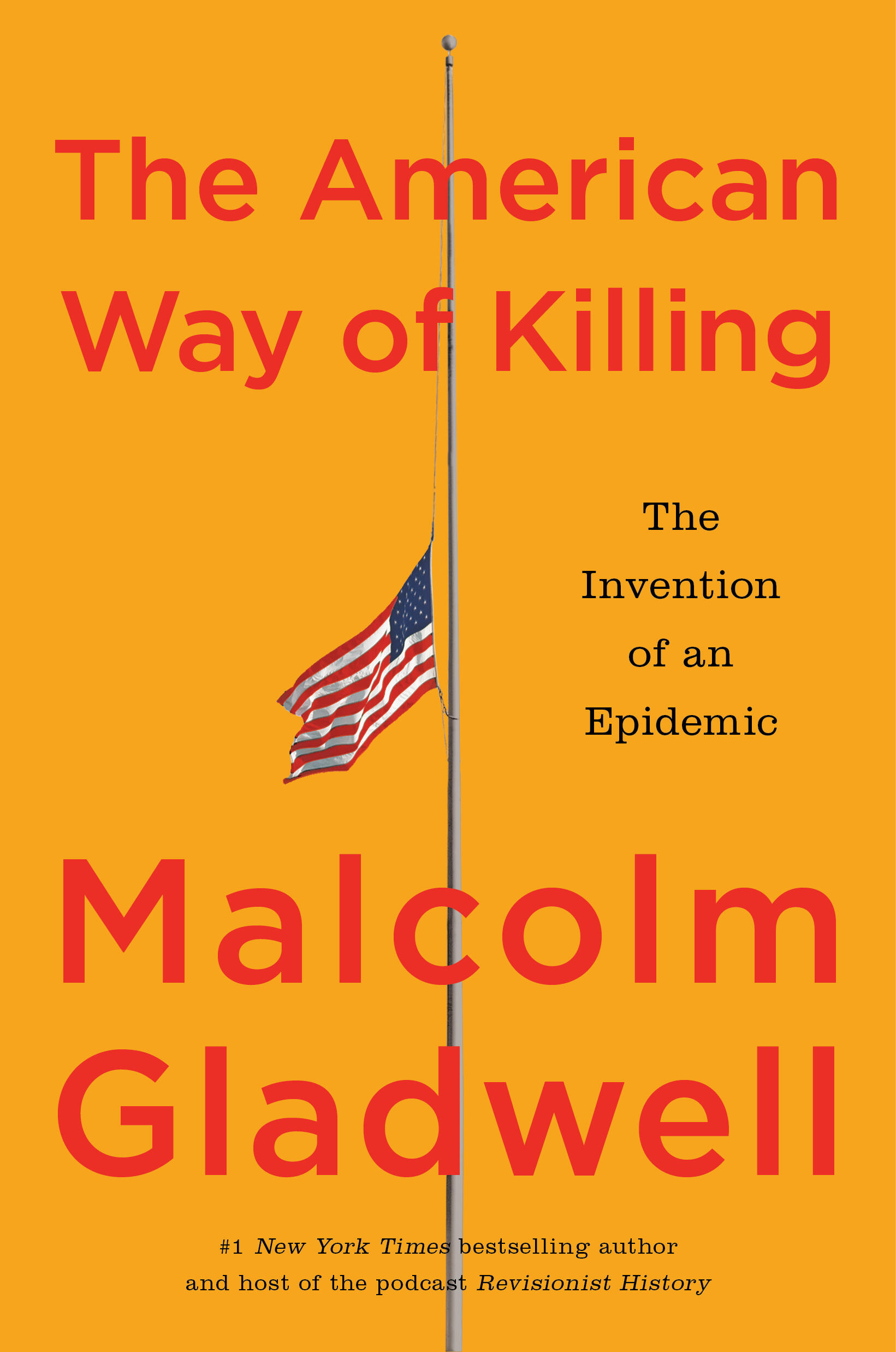
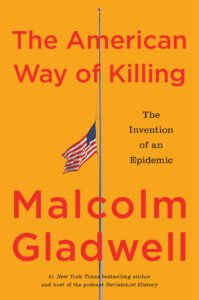
1. The American Way of Killing
Malcolm Gladwell examines gun violence and homicide in the United States through stories, historical material, interviews, and social research. Rather than treating the subject as a single shocking event, he asks how institutions, inherited assumptions, and national habits help shape the larger problem.
We would suggest it to a reader who finds abstract policy discussion hard to enter but will follow a concrete question into a larger argument. The potential value is not having an author confirm what you already believe. It is testing whether the connections he draws change what you think needs explaining.
This is a strong discussion candidate precisely because an accessible narrative and a complete explanation are not the same thing. Track where an example illustrates a claim and where the claim needs broader evidence. Choose it if you are willing to examine an argument, including its limits, rather than looking for a neutral catalogue of every position in the debate.
Best fit: Readers interested in public policy, social explanation, and narrative-led argument.
Know before you pick: Gun violence, injury, and death. Gladwell offers an interpretation; this guide does not treat every conclusion as settled fact.
A question to take into the book: What evidence would persuade you that a familiar explanation is incomplete?
Linked edition: Hardcover · 2026. ISBN 9780316603782. Covers and formats can vary; check the selected edition before ordering.

For thinking through a catastrophe without mistaking it for a forecast
2. Biological War: A Scenario
Annie Jacobsen uses a hypothetical biological catastrophe to explore how health systems, governments, and other institutions might respond as events escalate. The book combines a constructed scenario with reporting and interviews. That distinction is essential: the sequence of events is an imagined case, not an account of a pandemic that actually happened.
We include it for the reader who understands systems best when following consequences over time. A decision that seems manageable in isolation can look different once hospitals, supply chains, and public trust are under pressure together. The scenario format makes that interdependence easier to picture.
It is also worth reading against its own dramatic momentum. A plausible chain of failures is not the same as the most likely future, and expert interviews do not turn a constructed timeline into certainty. Choose this for a demanding conversation about preparedness and institutional choices, not for reassurance or a personalized emergency plan.
Best fit: Readers interested in risk, public-health preparedness, and the consequences of institutional decisions.
Know before you pick: Severe disease, mass death, and social collapse. A high-anxiety reading choice; the scenario is not a prediction or medical advice.
A question to take into the book: What does a worst-case scenario help us notice, and what might it cause us to overlook?
Linked edition: Hardcover · July 28, 2026. ISBN 9798217046034. Covers and formats can vary; check the selected edition before ordering.
For curiosity about the everyday mystery of having an inner life
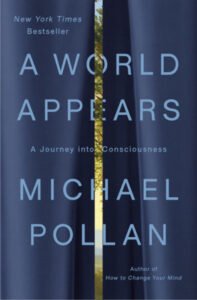
3. A World Appears: A Journey into Consciousness
Michael Pollan explores consciousness through science, philosophy, literature, spiritual practice, and other approaches. The starting point is surprisingly ordinary: we experience being ourselves, but explaining how that experience arises is much less straightforward than noticing that it exists.
This is our choice for a reader who wants nonfiction to create curiosity rather than supply a list of instructions. Questions about feeling, awareness, plants, and artificial intelligence invite you to compare ways of knowing that do not always fit neatly together. The appeal is the inquiry itself, especially if you like a book that leaves you discussing its questions over dinner.
Go in expecting an exploration, not a final solution to consciousness. A theory being discussed does not mean it has been established, and an interesting possibility about AI or plants is not proof of sentience. We would choose it over the more alarming titles here when the desired reading mood is wonder, while still keeping a skeptical eye on extraordinary claims.
Best fit: Curious general readers who enjoy the meeting point of science and philosophy.
Know before you pick: Includes spiritual and psychedelic perspectives alongside science. Not a clinical guide or proof that any particular theory of consciousness is correct.
A question to take into the book: What kind of evidence could tell us whether something other than ourselves has subjective experience?
Linked edition: Hardcover · February 24, 2026. ISBN 9781984881991. Covers and formats can vary; check the selected edition before ordering.
For a more useful conversation than another argument about screen time
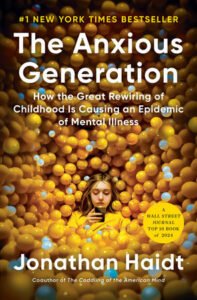
4. The Anxious Generation
Jonathan Haidt argues that the shift from play-based childhood toward phone-centered life has contributed to problems in young people’s mental health. He discusses sleep, attention, independence, social media, and the difficulties families face when trying to set boundaries alone.
We would recommend considering it for parents and educators because it provides a shared set of questions. A family can move beyond asking whether a child has been on a device too long and start discussing what that time replaced: sleep, unstructured play, in-person friendship, or something else. The collective-action angle also recognizes how hard it can be to make a household rule when the surrounding culture pulls the other way.
Read its causal arguments thoughtfully. Youth mental health has multiple influences, and debates about the strength and interpretation of the evidence should not disappear behind an urgent title. The book can start a practical conversation without becoming a diagnosis of your child or a reason to blame a family that handles technology differently. It was first published in 2024.
Best fit: Parents, teachers, and community reading groups interested in childhood, independence, and technology.
Know before you pick: Discusses anxiety, depression, self-harm, and suicide. Not a substitute for individual mental-health care or an uncontested explanation of every trend.
A question to take into the book: What change could several families make together that would be difficult for one child to sustain alone?
Linked edition: Hardcover · March 26, 2024. ISBN 9780593655030. Covers and formats can vary; check the selected edition before ordering.
Which one fits your reading mood?
A useful way to read any of these books is to keep three notes: what the author observed, what the author inferred, and what would change your mind. An absorbing story can make an argument easier to follow without making it complete. Take the questions seriously, follow the sources where your curiosity leads, and give yourself permission to disagree. For readers sensitive to alarming material, A World Appears offers a less catastrophe-focused starting point than the books about violence or biological risk.
For another reading mood, explore our related reading guide.
Book details and sources
Author, publisher, and distributor listings were checked on October 18, 2026. These establish the premises and editions; they do not make every character’s account or every nonfiction argument an independently verified fact.
- The American Way of Killing — author or publisher details; cover: author, publisher, or distributor image.
- Biological War: A Scenario — author or publisher details; cover: publisher image.
- A World Appears: A Journey into Consciousness — author or publisher details; cover: publisher image.
- The Anxious Generation — author or publisher details; cover: publisher image.
No live prices, availability promises, star ratings, or bestseller positions are quoted. Library borrowing is also worth considering before purchasing a book or a full series.